top of page
¿What does ultrasonic rhinoplasty consist of?
An ultrasonic rhinoplasty procedure that uses ultrasound technology to reshape the nose with greater precision and control, helping to improve facial harmony and breathing function, while causing less trauma to the tissues and allowing a more comfortable recovery.
Ultrasonic Rhinoplasty (Piezoelectric Rhinoplasty)
Ultrasonic rhinoplasty, also known as piezoelectric rhinoplasty or piezo rhinoplasty, is currently the most advanced technique available for nasal surgery. Unlike traditional rhinoplasty, which uses chisels and hammers to reshape nasal bones, ultrasonic rhinoplasty uses high-frequency ultrasound waves to sculpt and remodel bone with extreme millimetric precision.
This results in a more controlled procedure, with less trauma to surrounding tissues, reduced post-operative swelling, faster recovery, and more predictable and natural-looking outcomes. It is the preferred technique of elite surgeons in Istanbul for complex cases, nasal humps, deviation corrections, or patients seeking the highest aesthetic precision.
Istanbul has become one of the world’s leading destinations for ultrasonic rhinoplasty, offering highly specialised nasal surgeons, state-of-the-art piezoelectric technology, and prices up to 70% lower than in Western Europe.
How is ultrasonic rhinoplasty performed in Istanbul?
The procedure is performed under general anaesthesia and typically lasts between 2 and 4 hours, depending on case complexity and required corrections.
Step 1 — Facial analysis and digital preoperative design
Before surgery, the surgeon performs a complete facial analysis and uses 3D imaging software to design the expected result based on the patient’s anatomy, proportions, and aesthetic goals. This step ensures precise communication between surgeon and patient before entering the operating room.
Step 2 — General anaesthesia
The procedure is performed under general anaesthesia. The patient feels absolutely nothing throughout the operation and is continuously monitored by the anaesthesia team.
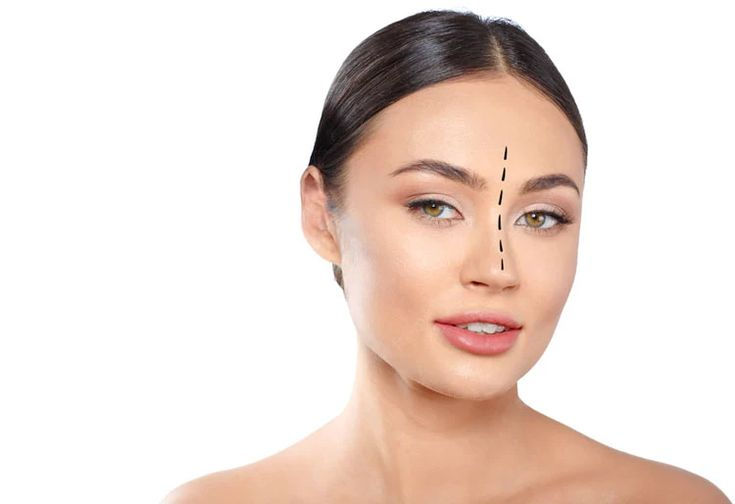
Step 3 — Incisions and surgical access
In most cases, an open approach is used: a small, discreet incision is made in the columella (the strip of skin between the nostrils), allowing the surgeon full visibility and access to the internal nasal structures. Internal incisions leave no visible scarring.
Step 4 — Piezoelectric ultrasonic bone sculpting
This is where ultrasonic rhinoplasty makes its key difference. The surgeon uses a piezoelectric device that emits high-frequency ultrasonic vibrations to reshape the nasal bones with millimetric surgical precision.
Unlike traditional instruments, the piezo device acts exclusively on bone without damaging surrounding soft tissues — blood vessels, nerves, and cartilage remain completely intact. The result is highly controlled bone sculpting, minimal bleeding, and minimal tissue trauma.
Step 5 — Cartilage work and nasal tip refinement
Once the bones are reshaped, the surgeon refines and repositions the nasal cartilage in the bridge and tip to achieve the desired shape, projection, and definition. The nasal tip requires especially delicate technique to ensure a natural and harmonious facial result.
Step 6 — Septum correction (if necessary)
If the patient has a deviated septum — whether functional or aesthetic — it is corrected during the same procedure, improving both breathing function and external nasal appearance.
Step 7 — Closure and protective splint
The incisions are closed with fine sutures, and an external nasal splint is placed to protect the nose for the first 7–10 days. In some cases, internal dressings are also used and removed during the early postoperative days.
Differences between ultrasonic and traditional rhinoplasty
Traditional rhinoplasty uses manual instruments such as chisels, osteotomes, and hammers to fracture and reposition nasal bones. While effective in experienced hands, it involves greater tissue trauma, increased swelling, more bruising, and a longer recovery period.
Ultrasonic rhinoplasty replaces these tools with piezoelectric vibrations, allowing the bone to be sculpted with precision that cannot be achieved manually. Soft tissues remain unharmed, bleeding is minimal, and postoperative recovery is significantly smoother. For dorsal hump correction, wide noses, bony asymmetries, or cases requiring high refinement, the ultrasonic technique offers superior results.
What does ultrasonic rhinoplasty correct?
-
Removes or reduces the dorsal hump
-
Narrows a wide nose or prominent nasal bones
-
Corrects bony or cartilaginous nasal asymmetries
-
Refines and projects the nasal tip
-
Corrects drooping, bulbous, or poorly defined tips
-
Improves deviated septum and breathing issues
-
Elevates a poorly projected nasal tip
-
Harmonises the nose with overall facial proportions
-
Corrects unsatisfactory results from previous rhinoplasty (revision rhinoplasty)
Recovery timeline
Days 1–2: The patient remains under medical supervision. Swelling, bruising around the eyes, and nasal congestion are normal. These symptoms are significantly reduced compared to traditional rhinoplasty due to the ultrasonic technique. Pain and inflammation are well controlled with medication.
Days 3–7: Discharge and transfer to the hotel. The patient rests in Istanbul with scheduled follow-up visits. A protective nasal splint remains in place. Sleeping with the head elevated and avoiding any pressure on the nose is essential.
Days 7–10: Removal of the nasal splint and sutures. This is the first moment the patient can see the new nasal shape, although swelling is still present.
Week 2: Most patients can return home and resume light daily activities. Bruising is almost completely resolved.
Weeks 4–6: Moderate physical activity can be resumed. Contact sports, swimming, and direct sun exposure must be avoided. Heavy glasses should also be avoided for several months.
3 months: Around 70–80% of swelling has resolved and results are clearly visible.
12 months: Final results are fully visible. The nasal tip, which takes the longest to settle, reaches its final shape. The columella scar becomes virtually invisible.
Advantages of ultrasonic rhinoplasty in Istanbul
-
Highly specialised nasal surgeons with international training and thousands of rhinoplasty cases performed
-
Latest-generation piezoelectric technology in top-tier clinics and hospitals
-
JCI-accredited hospitals and approval from the Turkish Ministry of Health
-
50–70% cost savings compared to Western Europe or the USA
-
All-inclusive packages: VIP transfers, hospital stay, 4–5 star accommodation, preoperative tests, medication, splint, and full follow-up care
-
Dedicated Spanish-speaking patient coordinator throughout your stay
-
Online medical follow-up for months after surgery
Ideal candidate for ultrasonic rhinoplasty
Ultrasonic rhinoplasty is especially suitable for patients who:
-
Want to remove or reduce a dorsal hump
-
Wish to narrow a wide or bony nose
-
Seek refinement of the nasal tip
-
Have nasal asymmetries
-
Present a deviated septum affecting function or aesthetics
-
Desire natural, refined facial harmony
-
Are in good general health with realistic expectations
-
Do not smoke or are willing to stop at least 3 weeks before and 1 month after surgery
-
Require revision rhinoplasty after an unsatisfactory previous procedure
Preguntas frecuentes
Six Pack Abdominal FAQ
Facelift Facial Lifting FAQ
Breast Augmentation with Implants FAQ
Ultrasonic Rhinoplasty FAQ
VASER Liposuction FAQ
Brazilian Butt Lift BBL FAQ
Tummy Tuck FAQ
Breast Lift FAQ
bottom of page